


If you're beginning your medical residency in Seattle, one major question is whether to rent or buy near Seattle hospitals. This decision can affect not just your monthly costs, but your flexibility, stress levels, and financial foundation for years to come. Here’s how to evaluate what makes the most sense for your situation during this critical stage of your career.
Understanding the Seattle Market for Resident Doctors
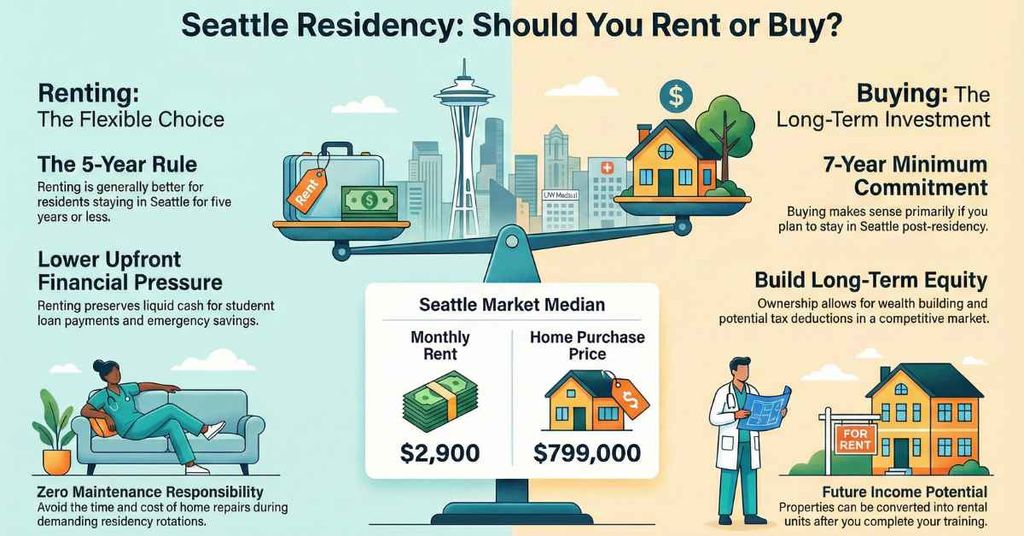
Seattle is home to several major hospital systems including the University of Washington Medical Center, Harborview Medical Center, Swedish First Hill, and Seattle Children’s. These facilities are centrally located in neighborhoods where housing demand is high and prices reflect that. For example, recent market data shows median rent in Seattle around $2,900 per month and median home prices near $799,000, illustrating the significant gap between rental and ownership costs. This gap is significant, especially when you're managing a resident’s salary.
Residency typically involves intense hours, limited time off, and future uncertainty. Add in high living expenses, and it’s clear why many residents choose to rent. According to the Association of American Medical Colleges, resident physicians should be especially mindful of financial commitments and liquidity early in their careers.

Why Renting Is Often the Better Choice During Residency
For most medical residents, renting near Seattle hospitals offers clear advantages. Renting provides short-term flexibility, reduced financial pressure, and freedom from home maintenance during a busy and often unpredictable schedule.
Residents typically don’t know where they’ll land after training. Renting allows you to focus on your program while remaining mobile for future fellowship opportunities or attending positions. It also requires less upfront cash, which is valuable when you're managing student loan payments and budgeting on a modest income. Renters don't have to worry about property taxes, home repairs, or dealing with a volatile market if they move in a few years.
According to Panacea Financial, renting is often the better move for residents who are staying in one place for less than five years, want low-maintenance housing, or are unsure about their long-term plans. This aligns with financial guidance from physician-focused advisors who consistently recommend renting until you're more established.
When Buying Might Make Sense
There are specific scenarios when buying a home near Seattle hospitals could be the right move. If you know you'll be staying in Seattle for more than seven years, have substantial savings for a down payment, and feel ready to manage a home alongside your demanding work schedule, it might be worth exploring. Some residents also buy with future rental income in mind, choosing properties that could be leased out once they move.
Buying a home allows you to build equity over time rather than spending money on rent with no return. You can also gain access to potential tax deductions and long-term appreciation in a competitive housing market. However, you must weigh these benefits against the responsibilities and risks. Selling within a few years could cost you money in transaction fees. Homeownership also brings unexpected maintenance expenses and added responsibilities that may not fit well with a resident’s schedule.
Before pursuing this path, the Consumer Financial Protection Bureau offers helpful tools to calculate affordability and compare total housing costs over time.
What Factors Should Guide Your Decision?
Your training timeline, career plans, financial reserves, and appetite for responsibility are all important factors. In most cases, residents are best served by renting unless they have a clear, long-term plan to stay in Seattle and the financial foundation to support homeownership.
When Renting Makes the Most Sense:
You’ll be in Seattle for five years or less
You want to keep cash liquid for emergencies or loan payments
When Buying Could Be Right:
You plan to stay in Seattle after residency and have stable finances
You want to begin building equity and see long-term value in ownership
Neighborhood choice also plays a role. If you rent first, you get time to explore Seattle’s many communities without making a long-term commitment. Neighborhoods like Capitol Hill, South Lake Union, or the University District offer walkable commutes to hospitals, while areas slightly north or east of the city may offer lower prices and more space if you don’t mind a longer commute.
Start with Renting, Then Reassess

For most residents, renting for at least the first year makes the most strategic sense. It gives you time to understand the city, get comfortable with your hospital schedule, and evaluate where you want to live long-term. This approach also keeps your financial commitments manageable while you build experience and savings.
Buying can still be an option down the line. Once you know your post-residency plans and have a stronger financial position, you'll be better equipped to purchase with confidence. If you're considering staying in Seattle beyond training, it’s never too early to start learning what to look for in a property or how different neighborhoods compare in terms of value and livability.
Final Takeaway
If you're a resident doctor deciding whether to rent or buy near Seattle hospitals, renting is usually the more flexible and financially sound choice. It allows you to adapt as your career evolves, avoid unexpected costs, and focus on your training without the additional pressure of homeownership.
If you’d like to explore rental-friendly neighborhoods or want expert help mapping out your long-term real estate strategy, book a strategy call with Alina to take the next step with confidence. Whether you're renting now or planning to buy later, she’s here to help you make informed decisions.
Alina Araujo is a top-rated Realtor based in Kirkland, WA, serving Bothell, Kenmore, Woodinville, and the surrounding Eastside. With over 13 years of experience and a background in mortgage lending and hospitality, she brings a unique combination of empathy, professionalism, and strategy to every transaction. Alina is fluent in English, Spanish, and Russian, and is known for her attention to detail, clear communication, and ability to make real estate feel simple and stress-free. She’s a Certified Luxury Home Marketing Specialist, a Relocation Specialist, and a Master Certified Negotiation Expert. Over 60 5-star reviews on Google.
Check out this article next